
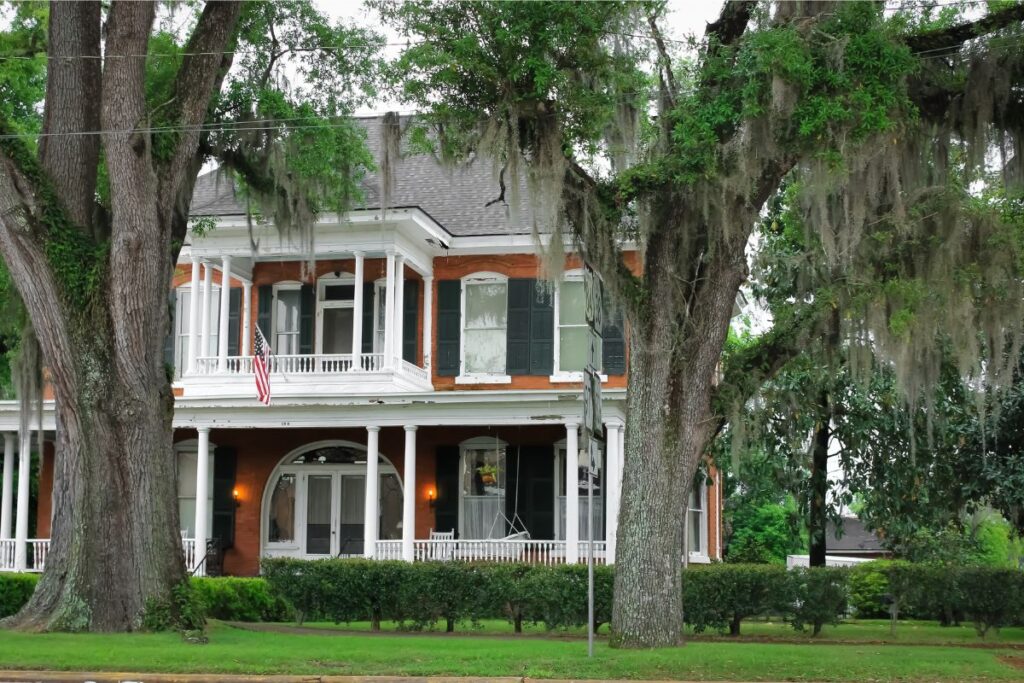
Understanding the Secretary of the Interior’s Standards for Historic Properties
Owning a historic home is an opportunity to preserve a meaningful piece of history while enjoying craftsmanship, architectural character, and distinctive details that are increasingly difficult to recreate today. Throughout Macon and Middle Georgia, historic homes continue to attract buyers who appreciate their beauty, individuality, and connection to the communities that surround them.
However, restoring or renovating a historic property can be very different from improving a newer home. Decisions involving windows, doors, plaster walls, flooring, masonry, porches, additions, and other architectural elements may require careful consideration, particularly when preservation incentives, local review requirements, or historic designations are involved.
One of the most important resources for understanding responsible historic preservation is the Secretary of the Interior’s Standards for the Treatment of Historic Properties.
Although the name may sound complicated, the Standards provide a nationally recognized framework for protecting historic properties while allowing them to remain useful, safe, and functional.
The goal of historic preservation is not necessarily to prevent change. It is to manage change thoughtfully so that the materials, craftsmanship, architectural features, and historic character that make a property significant are not unnecessarily lost.
What Are the Secretary of the Interior’s Standards?
The Secretary of the Interior’s Standards for the Treatment of Historic Properties are nationally recognized principles used to guide decisions concerning historic buildings, structures, sites, objects, districts, and landscapes.
The Standards are administered through the National Park Service and are used by preservation professionals, architects, contractors, government agencies, tax credit reviewers, historic district commissions, and property owners throughout the United States.
They address important decisions involving the maintenance, repair, alteration, replacement, restoration, and reconstruction of historic materials and features. Accompanying guidelines provide more detailed recommendations for applying the Standards to specific types of work.
Together, the Standards and guidelines help property owners determine how improvements can be completed without unnecessarily damaging the characteristics that give a historic property its identity.
The Four Treatment Approaches
The Standards recognize that every historic property is different. The appropriate approach depends on the property’s significance, physical condition, intended use, available documentation, and the goals of the project.
Four primary treatment approaches are identified: preservation, rehabilitation, restoration, and reconstruction.
Preservation
Preservation focuses on maintaining the property as it currently exists while protecting its historic form, materials, features, and integrity.
Maintenance and repair are emphasized, while extensive replacement, major alteration, and new construction are generally minimized. This approach is often appropriate when the property’s historic materials and features remain substantially intact.
Rehabilitation
Rehabilitation allows a historic property to be adapted for continued or new use through repairs, alterations, and compatible additions while preserving the features that convey its architectural, historical, or cultural significance.
This is often the most practical treatment for historic homes because it recognizes that properties may need updated kitchens, bathrooms, electrical systems, plumbing, heating and cooling systems, accessibility improvements, or additional living space.
Restoration
Restoration seeks to return a property to the appearance of a specific period in its history.
Features from other periods may be removed, while missing elements from the selected restoration period may be recreated using historical documentation and physical evidence. Restoration is generally more historically specific than rehabilitation.
Reconstruction
Reconstruction involves recreating a historic building, structure, landscape, or feature that no longer survives.
Because reconstruction requires sufficient documentation to reproduce the historic resource accurately and with minimal speculation, it has a more limited application than the other treatment approaches.
Rehabilitation Is Often the Most Relevant Approach for Homeowners
Most people purchasing a historic home are not attempting to turn it into a museum. They want to preserve its beauty and architectural character while making it comfortable and functional for modern life.
For that reason, rehabilitation is often the treatment approach most relevant to residential property owners.
Rehabilitation allows a home to accommodate modern living while encouraging owners to protect the materials, spaces, finishes, and craftsmanship that give the property its historic identity.
A kitchen may be modernized, mechanical systems may be updated, and an addition may sometimes be constructed. However, the work should be approached in a way that avoids unnecessary damage to the property’s character-defining features.
Historic Character and Modern Living Can Coexist
Following preservation principles does not mean that homeowners must live without modern comfort or convenience.
The objective is to introduce necessary improvements carefully so that the home can continue serving its owners without losing the distinctive materials, architectural proportions, craftsmanship, and historic details that make it special.
Repair Is Usually Preferred Over Replacement
One of the most important principles found throughout the Standards is that historic materials and features should be repaired whenever reasonably possible rather than automatically replaced.
Older homes may contain handmade wood windows, heart pine flooring, decorative trim, masonry, plaster walls, fireplaces, staircases, doors, hardware, built-in cabinetry, and other elements that contribute significantly to the property’s architectural identity.
Removing these features simply because newer materials are easier to obtain can permanently change the appearance and character of the home.
A preservation-minded approach begins by evaluating the condition of the existing feature. If it can be repaired successfully, repair is generally preferred. If deterioration makes replacement necessary, the new work should be compatible with the original feature in its design, appearance, scale, material, color, texture, and craftsmanship whenever appropriate.
What the Standards Can Mean for Historic Plaster
Historic plaster walls are an excellent example of why preservation decisions should be made carefully.
Traditional plaster has a different texture, depth, appearance, and physical character from modern drywall. It may also be connected to decorative moldings, curved walls, ornamental ceilings, historic paint finishes, or other architectural details.
When plaster is cracked or damaged, complete removal is not always necessary. Depending on its condition, loose plaster may be stabilized, cracks may be repaired, missing areas may be patched, and the original surface may be retained.
When a project is being reviewed under preservation requirements or as part of a historic rehabilitation tax incentive application, replacing repairable plaster with ordinary drywall may not be considered an appropriate treatment. Reviewers may expect the owner to demonstrate why the original material cannot reasonably be repaired.
Not Every Crack Requires Complete Replacement
Historic plaster can sometimes appear more severely damaged than it actually is.
Before removing it, homeowners should consider consulting a contractor or preservation professional who understands traditional plaster systems and can determine whether stabilization, patching, or selective repair may be possible.
The Standards May Address Both Exterior and Interior Work
Many local historic district regulations focus primarily on exterior features that can be seen from a public street or other public area. These may include roofs, porches, windows, doors, exterior materials, fences, additions, and demolition.
However, the Secretary of the Interior’s Standards and their accompanying guidelines address both exterior and interior features.
Interior spaces may become especially important when a project is seeking federal or state historic rehabilitation tax incentives, receiving certain preservation grants, or operating under another preservation agreement.
Original floor plans, staircases, plaster walls, woodwork, mantels, doors, flooring, decorative finishes, and other significant interior elements may all be considered when determining whether a rehabilitation preserves the property’s historic character.
Property owners should never assume that being located in a historic area automatically creates the same requirements for every project. The applicable rules depend on the property’s designation, location, proposed work, funding, incentives, and any easements or agreements affecting it.
The National Register Does Not Automatically Control Every Renovation
A common misunderstanding is that listing a privately owned property in the National Register of Historic Places automatically prevents the owner from making changes.
National Register recognition identifies properties and districts that possess historical, architectural, archaeological, engineering, or cultural significance. Listing can also help establish eligibility for certain preservation incentives.
However, National Register listing alone generally does not impose the same type of direct restrictions that may accompany local historic district ordinances, preservation easements, government-funded projects, or historic tax credit participation.
Before beginning a project, owners should determine whether the property is individually designated, located within a local or National Register historic district, subject to a preservation easement, participating in an incentive program, or affected by local design review requirements.
Historic Designations Are Not All the Same
A National Register listing, local historic district designation, preservation easement, and historic rehabilitation tax credit project can each carry different benefits, procedures, and responsibilities.
Understanding exactly how a property is designated is one of the first steps toward planning an appropriate renovation.
When Following the Standards May Be Required
The Standards are widely used as general guidance for work involving historic properties, but they become especially important when a project is connected to certain government programs or preservation incentives.
The Standards for Rehabilitation are used to evaluate projects seeking certification through the Federal Historic Preservation Tax Incentives Program. They may also influence state rehabilitation tax credit programs, preservation grants, federally assisted projects, local design guidelines, and the review of work involving certain designated properties.
Homeowners participating in these programs may need to submit plans, photographs, descriptions of existing conditions, proposed materials, architectural drawings, and other documentation before or during the project.
Beginning work before receiving the appropriate guidance or approval can create unnecessary complications and may jeopardize eligibility for certain incentives.
Historic Rehabilitation Tax Incentives
Historic rehabilitation tax incentives can help offset a portion of the qualified expenses associated with rehabilitating an eligible historic property.
Eligibility, project requirements, qualified expenses, ownership considerations, property use, application procedures, and review standards can be complex. Federal and state programs may also have different requirements.
The availability of an incentive should never be assumed simply because a home is old or located in a historic neighborhood. Owners should verify the property’s eligibility and seek professional guidance before making financial or construction decisions.
Consult Preservation Professionals Before Work Begins
The earliest stages of planning are often the best time to seek guidance.
A preservation consultant can help determine whether a property and project may qualify, identify historic features that should be protected, explain the documentation process, and help owners avoid alterations that could create problems during review.
Historic Macon Foundation Provides Local Preservation Guidance
Macon property owners do not have to navigate historic preservation questions entirely on their own. Historic Macon Foundation is a local nonprofit organization whose mission is to revitalize communities by preserving architecture and sharing history.
Historic Macon applies nationally recognized preservation practices to local properties, neighborhoods, and community needs. Its work includes preservation advocacy, educational programming, neighborhood revitalization, real estate initiatives, and professional consulting services.
For homeowners and investors considering a historic rehabilitation project, Historic Macon can provide valuable local knowledge and help explain how national and state preservation programs may apply to a specific Macon property.
Historic Rehabilitation Tax Credit Consulting
Historic Macon provides consulting services for historic rehabilitation tax incentive projects and has extensive experience helping property owners work through the certification and review process.
This assistance may include evaluating potential eligibility, documenting existing conditions, reviewing proposed work, preparing application materials, communicating with reviewing agencies, and helping owners understand how the Secretary of the Interior’s Standards relate to their project.
Historic Macon can also assist with National Register of Historic Places nominations. National Register recognition may be an important eligibility requirement for certain historic rehabilitation incentives, although listing does not guarantee that a property or project will qualify.
The organization also offers educational resources for historic property owners. Its Historic Homeowner’s Handbook addresses topics such as maintenance, preservation resources, and historic tax incentives. Because programs and requirements can change, homeowners should confirm current information directly with Historic Macon or the appropriate reviewing agency.
Local Guidance Can Prevent Costly Mistakes
Before removing original windows, demolishing plaster walls, replacing historic masonry, altering a porch, changing a floor plan, or beginning a major addition, property owners should consider speaking with preservation professionals.
Historic Macon can help owners understand the significance of existing features, identify potential preservation incentives, and approach rehabilitation decisions with greater knowledge and confidence.
Historic Macon’s involvement can be especially valuable because the organization understands both nationally recognized preservation principles and the distinctive architectural history of Macon’s neighborhoods.
Property owners can learn more about its preservation consulting services by visiting Historic Macon Foundation’s Preservation Consulting Services.
Questions to Ask Before Renovating a Historic Home
Before beginning work on a historic property, owners should gather information about the home, its designation, the proposed project, and any review requirements that may apply.
Important questions may include:
Is the property individually listed in the National Register of Historic Places?
Is it located within a National Register or locally designated historic district?
Does a local historic preservation commission need to review any portion of the project?
Is the property subject to a preservation easement, covenant, or other recorded agreement?
Could the project qualify for federal or Georgia historic rehabilitation tax incentives?
Which materials, spaces, and architectural details are considered character-defining?
Can damaged historic materials be repaired rather than replaced?
Do the architect, contractor, and tradespeople have experience working with historic properties?
Have the appropriate professionals and agencies been consulted before construction begins?
Why the Standards Matter to Historic Home Buyers
Buyers considering a historic home should understand that ownership may involve responsibilities and opportunities that are different from those associated with newer properties.
Historic materials may require specialized maintenance. Certain alterations may require review. Appropriate contractors may be more difficult to locate, and carefully executed repairs may cost more than conventional replacements.
At the same time, historic properties may offer exceptional craftsmanship, distinctive architecture, established neighborhoods, meaningful community connections, and potential access to preservation incentives.
Before purchasing, buyers should investigate the property’s designation, condition, renovation history, applicable restrictions, maintenance needs, and any available documentation concerning previous preservation work.
Why the Standards Matter to Historic Home Sellers
Sellers can also benefit from understanding the preservation history and architectural significance of their homes.
Original plaster, wood windows, heart pine flooring, mantels, millwork, masonry, hardware, and other historic features can be important selling points when they have been maintained and presented properly.
Documentation of completed rehabilitation work, tax credit participation, professional repairs, historic designations, and preserved architectural details may help buyers better understand the property’s history and value.
However, sellers should avoid making guarantees about future tax incentives, renovation approvals, or allowable alterations. Buyers should be encouraged to conduct their own research and consult the appropriate preservation professionals and government agencies.
Historic Features Should Be Marketed as Assets
The craftsmanship and architectural details found in a historic home can help distinguish it from other properties on the market.
Thoughtful photography, accurate descriptions, historical documentation, and knowledgeable representation can help buyers recognize the significance of features that might otherwise be overlooked.
Preservation Protects More Than an Individual Home
Historic preservation benefits more than the owner of a single property. Carefully maintained homes help protect the architectural identity, visual continuity, and cultural history of entire neighborhoods.
When original buildings are preserved and responsibly adapted, communities retain the physical places that connect residents to earlier generations.
Preservation can also support neighborhood stability, encourage reinvestment, reduce unnecessary demolition waste, strengthen local identity, and contribute to the distinctive character that makes Macon an exceptional place to live.
The Secretary of the Interior’s Standards provide a national framework for this work, while organizations such as Historic Macon Foundation help property owners apply preservation principles at the local level.
Make Informed Decisions About Historic Property
Historic homes offer beauty, craftsmanship, character, and stories that cannot be replaced once they are lost. Preserving those qualities requires thoughtful planning and a clear understanding of the property before renovations begin.
The Secretary of the Interior’s Standards help homeowners, architects, contractors, and preservation professionals determine how historic materials and features can be maintained while allowing properties to meet modern needs.
For Macon property owners, Historic Macon Foundation offers an important local resource for preservation consulting, tax incentive guidance, National Register nominations, education, and historic property stewardship.
Whether you are purchasing a historic home, preparing one for sale, or considering a major rehabilitation, gathering the right information early can help you protect the property’s character, avoid unnecessary mistakes, and make more confident decisions.
Source: The Secretary of the Interior’s Standards for the Treatment of Historic Properties
Introduction, Historical Overview, Preservation Standards & Guidelines, Rehabilitation Standards & Guidelines (pp.163-241, PDF)
Restoration Standards & Guidelines and Reconstruction Standards & Guidelines (pp.1-162, PDF)
If you are considering buying or selling a historic property in Macon or throughout Middle Georgia, knowledgeable real estate representation can help you approach the process with greater confidence. Joanna “JoJo” Jones can help buyers evaluate historic properties, understand important questions to ask, and identify homes that align with their goals. She can also help sellers professionally position and market the architectural character, craftsmanship, history, and distinctive features that make their homes exceptional. For questions involving preservation requirements, historic rehabilitation tax incentives, or proposed renovation work, property owners should also consult Historic Macon Foundation and the appropriate local, state, or federal preservation authorities.

New Listings: Macon Georgia
Sign up: Market Reports
Learn More: About JoJo
View More: Macon Listings
Featured: Macon Magazine
JoJo's Properties: JoJo's Listings Hub
Contact Me: Sell Smart with JoJo™