
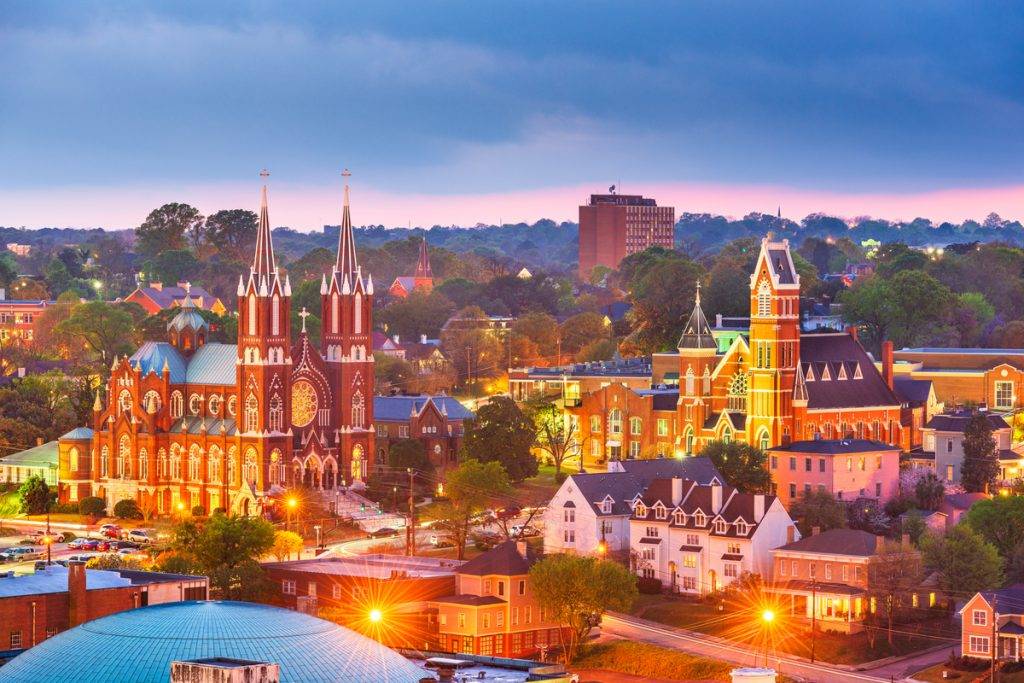
The Future of Macon, GA: Planning for Growth Through 2055
What will Macon look like in 2055? That may sound like a question for another generation, but some of the decisions that could help shape that Macon are beginning today.
Macon-Bibb County is developing a new comprehensive plan called Macon It Happen, a long-range roadmap designed to guide how the community will grow, connect, and invest through the year 2055, with particular attention being given to priorities for the next five years.
For those of us who call Macon home, this is about much more than looking decades into the future. The conversation includes many of the things that influence how we experience a community every day: where people live, how neighborhoods develop, how we get around, where businesses grow, and what helps make Macon a place where people want to build their lives.
And for anyone thinking about buying a home in Macon, GA, selling a property, relocating here, or investing in the community, understanding how Macon is thinking about its future provides an interesting perspective on the place we call home.
Macon Is Creating a Roadmap for the Future
Comprehensive planning is about looking at where a community is today, deciding where it wants to go, and identifying ways to move toward that vision over time.
Macon It Happen is being developed around five major elements that together touch nearly every part of community life.
Five Areas Shaping Macon’s Comprehensive Plan:
• Land use and how space is allocated for growth and development
• Transportation and how people move throughout the community
• Housing and where people live
• Economic development and growth of the local economy
• Quality of life and the things that make a community worth living in
These subjects are closely connected. Where homes are built can influence transportation needs. Economic development can influence where people work. Land use decisions can affect the character and function of neighborhoods. Parks, recreation, cultural amenities, infrastructure, and other quality-of-life considerations can influence how people experience their community.
A city is ultimately the result of all of these pieces coming together.
Where Will Macon Grow?
One of the central questions in long-term planning is where future development and redevelopment should occur.
Macon-Bibb Planning & Zoning is currently inviting residents throughout the county to participate in land-use workshops and share their ideas about how different areas should grow and develop in the future.
That community involvement matters because development is not simply about adding buildings. It is also about considering how neighborhoods look, feel, and function.
Some areas may experience new development. Others may see redevelopment or reinvestment. Established neighborhoods may have different priorities than growing areas of the county. Commercial corridors, residential areas, transportation routes, recreational spaces, and employment centers all become pieces of a much larger puzzle.
Planning for 2055 means thinking about how those pieces might work together rather than considering each one in isolation.
Housing Is Part of Macon’s 2055 Conversation
For anyone interested in Macon, GA real estate, one part of the comprehensive plan is particularly relevant: housing.
Homes are the foundation of neighborhoods, but a community’s housing needs are rarely static. They change as populations, lifestyles, household sizes, economic conditions, and preferences evolve.
Macon already offers a remarkably diverse collection of places to live. There are historic homes filled with architectural character, established neighborhoods shaded by mature trees, newer residential communities, downtown living opportunities, properties with acreage, gated communities, luxury homes, and houses that have welcomed generations of the same family.
Looking toward 2055 means considering how that existing housing fits alongside the needs of future residents.
It also means asking an important question: What kinds of places will people want to call home decades from now?
The Future of Macon’s Neighborhoods Matters
When people search for a home, they rarely choose the structure alone.
They choose the street. They choose the neighborhood. They consider the drive to work, access to shopping, restaurants, schools, recreation, medical care, parks, entertainment, and the people and places that make everyday life enjoyable.
That is why conversations about the future of Macon’s neighborhoods are also relevant to real estate.
A home exists within a larger environment. The character of that environment can become an important part of why someone chooses one area over another.
For longtime Macon residents, neighborhoods can also represent something deeper. They contain memories, traditions, architecture, familiar streets, and a sense of identity that deserves consideration as a community grows and changes.
Transportation Is About More Than Roads
How people move through a city influences how they experience it.
Transportation planning can include roads, connectivity, walking, cycling, access between neighborhoods, and the relationship between where people live and the places they need to reach.
For homebuyers, location has always been important. But what makes a location convenient can evolve as a city grows.
A neighborhood’s relationship to employment centers, shopping, recreation, downtown, major roads, and other destinations can influence how easily residents move through their daily lives.
Thinking about Macon in 2055 therefore also means thinking about how tomorrow’s residents will get from home to everything else that makes up their day.
Economic Development Helps Shape a Community
A city’s future is also connected to its economic opportunities.
Businesses provide jobs, services, restaurants, shopping, entertainment, investment, and reasons for people to spend time in different parts of a community. New economic activity can also bring renewed attention to areas that may have been overlooked in the past.
Macon’s comprehensive planning process includes economic development as one of its five principal elements, recognizing the relationship between the local economy and the community’s long-term future.
For people considering moving to Macon, Georgia, employment and economic opportunity can be part of the decision. For existing residents, a healthy local economy can contribute to a community where people have opportunities to work, start businesses, invest, and build their lives.
Then There Is Quality of Life
Perhaps the most personal part of planning for Macon’s future is something that cannot be measured simply by counting houses, roads, or businesses.
It is quality of life.
What makes you enjoy living somewhere?
It may be spending a Saturday morning downtown, taking a walk through a neighborhood you love, enjoying Macon’s parks and outdoor spaces, attending a concert, meeting friends for dinner, exploring the city’s history and architecture, or simply sitting on your own front porch at the end of the day.
Quality of life is made up of thousands of experiences that collectively turn a location into a community.
That is why it deserves a place in a conversation about what Macon should become by 2055.
Why Long-Term Planning Matters to Real Estate
It would be easy to look at a comprehensive plan and immediately ask what it means for property values. But that is not the most useful way to think about a planning process that will unfold over decades.
No long-range plan can tell us exactly what an individual home will be worth in the future, and it would be misleading to suggest that a particular planning decision guarantees appreciation in a neighborhood.
What planning can do is help establish the broader environment in which a real estate market operates.
Housing, transportation, land use, economic development, neighborhood investment, and quality of life are all part of the larger community people evaluate when deciding where they want to live.
That makes Macon’s long-term planning relevant not because it predicts the future value of a house, but because it asks what kind of community will surround that house in the years ahead.
Today’s Homebuyers Could Be Part of Macon’s 2055 Story
There is something fascinating about looking thirty years into the future from the perspective of real estate.
A young couple buying their first home in Macon today may still be living here in 2055. A child growing up in one of Macon’s neighborhoods may eventually decide to raise a family here. Someone relocating to Macon for a new opportunity could become a longtime resident, business owner, community leader, or neighbor.
Homes have a way of connecting generations to places.
The house someone purchases today may become part of a family story that lasts for decades. At the same time, the neighborhood and community surrounding that home will continue evolving.
That makes the question of what Macon will look like in 2055 much less distant than it first appears.
Macon Residents Are Being Asked to Help Shape the Answer
One of the most important aspects of the Macon It Happen process is that the vision is not being developed without public participation.
Macon-Bibb Planning & Zoning is holding community meetings and workshops designed to gather input from residents about future development and the priorities that matter in different parts of the county.
The planning process is scheduled to continue through 2027 as the individual elements are researched, discussed, drafted, brought together, refined, and ultimately moved toward adoption. That gives residents an opportunity to think beyond what Macon is today and participate in a conversation about what they hope it can become. Residents interested in learning more can visit the official Macon It Happen Comprehensive Plan website for information about the planning process, community engagement opportunities, and project updates.
Preserving What Makes Macon Special While Looking Forward
Growth does not have to mean losing the things that give a city its identity.
Macon has a character that cannot simply be recreated somewhere else. Its architecture, neighborhoods, music, history, institutions, trees, streets, traditions, and people have created a sense of place that has developed over generations.
The challenge of planning for the future is finding ways to welcome new opportunities while respecting the qualities that already make a community distinctive.
That balance is especially meaningful in real estate. Buyers may be attracted to something new, but they are often equally attracted to authenticity, established neighborhoods, architectural character, and a sense that a place has a story.
Macon has plenty of stories.
The question now is what the next chapters will look like.
What Will Macon Look Like in 2055?
No one can answer that question completely today.
That is precisely why the conversation matters.
The Macon of 2055 will be shaped by countless decisions made along the way: where homes are built, how neighborhoods evolve, where businesses invest, how people move through the community, what is preserved, what is renewed, and what new ideas are given room to grow.
Some of the people who will experience that future are already here. Others have not discovered Macon yet.
But whether you have lived here your entire life or are just beginning to explore homes for sale in Macon, GA, there is something exciting about living in a community that is asking where it wants to go next.
2055 may be decades away.
The work of imagining it has already begun.
Discover Your Place in Macon
If you’re considering buying a home in Macon, Georgia, relocating to the area, or selling your current property as you begin your own next chapter, local knowledge can help you understand the neighborhoods, homes, and opportunities that make this community unique. Contact Joanna “JoJo” Jones to begin your Macon real estate journey.
Disclaimer: This article is provided for general informational purposes only and is based on publicly available information regarding Macon-Bibb County’s long-range planning initiatives. Plans, priorities, timelines, development proposals, and land-use decisions may change and should not be considered guarantees of future development or investment. Nothing in this article is intended to predict future property values or provide financial, investment, legal, or land-use advice. Readers should consult the appropriate local authorities and qualified professionals regarding specific properties, zoning, development, or investment decisions.

New Listings: Macon Georgia
Sign up: Market Reports
Learn More: About JoJo
View More: Macon Listings
Featured: Macon Magazine
JoJo's Properties: JoJo's Listings Hub
Contact Me: Sell Smart with JoJo™