

The Douglass Theatre: Macon’s Historic Home of Black Music and Culture
In a city known around the world for music, the Douglass Theatre in Macon, Georgia, holds a place all its own.
For more than a century, the theater has stood as a stage for Black artistry, a gathering place for the community, and a powerful reminder of the opportunities Black entrepreneurs and performers created during segregation.
Ma Rainey, Bessie Smith, Cab Calloway, Little Richard, James Brown, and Otis Redding are all part of the Douglass story. Yet the theater’s importance reaches beyond the famous names on its historic roster. Its deeper story is one of vision, enterprise, identity, preservation, and pride.
During segregation, the Douglass created a place where Black performers could command the stage and Black audiences could experience music, comedy, motion pictures, and community life in a venue built with them at its center.
Charles H. Douglass and a Vision Larger Than a Theater
The theater bears the name of Charles Henry Douglass, a prominent Black Macon entrepreneur whose business interests extended beyond entertainment into real estate and other ventures.
Douglass understood both the business of performance and the cultural importance of controlling a place where Black talent could be seen. Before the present theater opened, Douglass had already gained experience in entertainment enterprises. Surviving business records associated with his theatrical work date to 1912, while the present Douglass Theatre building opened in 1921.
That distinction helps explain why some accounts refer to an earlier beginning. Charles Douglass’s theatrical work preceded the surviving building, but 1921 is the date consistently associated with the opening of the historic Douglass Theatre known today.
Its location near Macon’s railroad activity and Black commercial life placed the theater within a busy world of travelers, businesses, hotels, performers, and audiences. At a time when segregation restricted where Black residents could gather and how Black performers could reach audiences, the Douglass represented ownership, access, and possibility.
Black Vaudeville, Blues, and the Theater Owners Booking Association
The Douglass became part of the world of Black vaudeville. Charles Douglass was associated with the Theatre Owners Booking Association, commonly known as T.O.B.A., a touring circuit that booked Black entertainers into theaters across the South and beyond.
The circuit offered vital performance opportunities during an era when mainstream venues routinely excluded Black artists and patrons. Its working conditions were often difficult for performers, but its theaters helped circulate the music, comedy, dance, and dramatic traditions that profoundly influenced American entertainment.
At the Douglass, audiences could encounter leading artists of the era. The theater’s own history identifies blues giants Ma Rainey and Bessie Smith, bandleader and entertainer Cab Calloway, and the celebrated comedy team Butterbeans and Susie among those who appeared there.
These performances placed Macon on a much larger cultural map. The Douglass was not simply receiving entertainment from elsewhere. It was participating in a network through which Black performance traditions traveled, developed, and reached new audiences.
The Silver Screen and Films Made for Black Audiences
Live performance was only part of the theater’s early identity. The Douglass also presented silent and sound motion pictures, including films created for Black audiences during a period when mainstream Hollywood provided few substantial or authentic representations of Black life.
Archival records preserved by the Digital Library of Georgia document the theater’s relationship with distributors, performers, advertising, and film exhibition. Those records include material connected with independent Black cinema and producers such as pioneering filmmaker Oscar Micheaux.
Known historically as “race films,” these motion pictures were generally produced for Black audiences and often featured Black casts. Although the historical term reflects the language of its era, the films provided an important alternative space in which Black characters, families, ambitions, conflicts, and communities could appear on screen with greater depth and agency.
A Rare Historical Record
Surviving Douglass Theatre business materials help researchers study not only what appeared on the stage and screen, but also how Black entertainment moved through the South during the early twentieth century.
Fannie Appling Douglass Carries the Legacy Forward
After Charles H. Douglass died in 1940, his wife, Fannie Appling Douglass, and other members of the Douglass family carried the enterprise forward.
As musical tastes changed and rhythm and blues, soul, and rock and roll began reshaping American popular culture, the Douglass remained a place where Black audiences could gather and where artists could build a following.
The theater’s long life across changing eras is one reason it is so significant. It connected the age of vaudeville and early Black cinema with the generation that would make Macon one of the most recognizable music cities in America.
Otis Redding and Hamp Swain’s “Teenage Party”
One of the most beloved chapters in the theater’s history belongs to a young Otis Redding.
Before he became known internationally as the King of Soul, Redding competed in talent shows at the Douglass. The shows are closely associated with Macon radio personality Hamp “King Bee” Swain and his “Teenage Party.” Historical accounts report that the teenage singer competed for a five-dollar prize and won the talent contest for 15 consecutive weeks before he was no longer permitted to compete.
It is a remarkable piece of Macon history: one of the defining voices of American soul music testing his talent before local audiences on the Douglass stage.
The theater also connects to other artists who transformed twentieth-century music. Its history includes Little Richard and James Brown, placing the Douglass within the same extraordinary Macon story that later produced and attracted generations of influential performers.
More Than Entertainment During Segregation
The Douglass offered enjoyment, but its meaning was never limited to entertainment.
In the segregated South, a Black-owned cultural venue provided an important place for entertainment, commerce, and community life. Inside the theater, Black audiences could see accomplished Black performers presented prominently on stage.
Performers found a platform. Neighbors found one another. Young people could watch artists who looked like them take command of a stage. That sense of belonging remains central to how the Douglass describes its mission today. The theater presents itself as a place of connection, pride, purpose, and cultural exchange, with programming that highlights Black history, women’s history, notable historical figures, and arts education for young artists.
Closure, Threatened Demolition, and a Community That Would Not Let Go
After more than half a century of operation, the Douglass closed in 1973. The building was ransacked and remained dormant as its future grew increasingly uncertain.
By the early 1980s, demolition threatened the historic theater. The community rallied to save it, demonstrating that the Douglass was not an expendable old building. It was a vessel of memory and an irreplaceable part of Macon’s cultural inheritance.
Preservation efforts ultimately led to an extensive restoration. The theater reports that a $2.3 million renovation was completed in 1996, preparing the Douglass for a new life as a modern cultural venue while honoring its historic identity.
The restored theater reopened in 1997. Its return was more than the reopening of a performance space. It represented the recovery of a story that could easily have been lost.
Macon Nearly Lost the Douglass
Had the proposed demolition gone forward, Macon would have lost both an important historic structure and one of its clearest physical links to generations of Black artistic achievement.
The theater survives because the community decided that its history deserved a future.
A Living Theater, Not a Museum Piece
Today, the Douglass remains active at 355 Martin Luther King Jr. Boulevard in downtown Macon. Its programming includes live music, theater, film, festivals, arts education, community events, and opportunities for emerging and established artists.
That continuing activity is essential to the theater’s legacy. The Douglass does not ask Macon merely to remember what happened there. It invites new performers, audiences, students, and families to become part of what happens next.
The phrase “The Showtime of the South” captures that blend of history and forward motion. The marquee may preserve a celebrated past, but the stage still belongs to the present.
The Douglass Theatre and the Story of Macon
Macon’s historic places reveal that the city’s cultural identity was built through many communities and many kinds of creativity. The Douglass Theatre is indispensable to that understanding.
Its history joins entrepreneurship with music, architecture with memory, and local community life with national cultural movements. It tells us that Macon’s influence did not emerge from a single stage, neighborhood, or musical tradition. It grew from places where performers found opportunities, audiences gathered, and important cultural traditions were preserved and shared.
For longtime residents, the Douglass is a source of memory and pride. For newcomers, it is an invitation to look more deeply at the city they are choosing to call home.
Experience the Douglass Theatre
Reading about the Douglass can explain why the theater matters.
Attending a performance allows you to experience it.
Walk beneath the marquee on Martin Luther King Jr. Boulevard.
Enter a building saved by the community.
Take a seat in a theater that welcomed legends and encouraged young artists before the wider world knew their names.
Then watch as that same stage becomes part of another story.
The Douglass Theatre demonstrates what preservation can accomplish when a community refuses to surrender an important place.
It also demonstrates why preservation must be followed by continued use, responsible stewardship, arts education, community investment, and sincere invitations for new audiences to participate.
The Douglass survives because Macon saved it. It remains alive because artists keep creating, audiences keep gathering, and new generations continue discovering what the theater represents.
Plan a Visit to the Douglass
Visit the historic Douglass Theatre at 355 Martin Luther King Jr. Boulevard in downtown Macon and experience one of its concerts, films, theatrical productions, festivals, educational programs, or community events.
Explore current programming and ticket information through the official Douglass Theatre website.
Planning to Visit or Move to Macon?
Whether you are planning a visit, considering a move, or already calling Middle Georgia home, places such as the Douglass Theatre reveal the history, culture, and community spirit that make Macon distinctive.
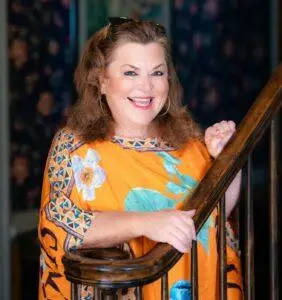
Joanna “JoJo” Jones understands that choosing a home is also about choosing a community.
From Macon’s historic neighborhoods and cultural landmarks to its music, restaurants, events, and welcoming way of life, JoJo helps buyers discover more than available properties.
She helps them understand what it can mean to become part of Macon.
If you are considering buying or selling a home in Macon or Middle Georgia, contact JoJo to begin your next chapter.
New Listings: Macon Georgia
Sign up: Market Reports
Learn More: About JoJo
View More: Macon Listings
Featured: Macon Magazine
JoJo's Properties: JoJo's Listings Hub
Contact Me: Sell Smart with JoJo™